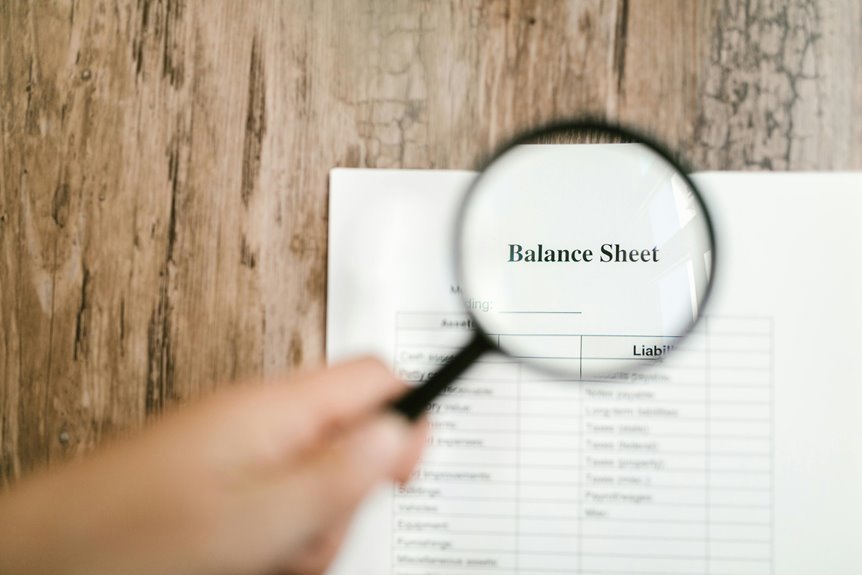
Balance Sheet: Overview and Usage
A balance sheet serves as a critical financial statement that outlines a company’s assets, liabilities, and equity at a specific moment. This document provides insights into the financial health of an organization, making it a vital tool for stakeholders. Understanding its components and their relationships can reveal much about a company’s operational efficiency. However, the implications of these figures extend far beyond mere numbers, inviting a deeper exploration into their significance and application.
Components of a Balance Sheet
The components of a balance sheet serve as critical indicators of a company’s financial health and stability.
Assets, representing resources owned, are balanced against liabilities, indicating obligations owed. The equity section reflects the residual interest in the company’s assets after liabilities are deducted.
Together, these elements provide a comprehensive snapshot of financial positioning, essential for stakeholders seeking to understand the organization’s economic freedoms and responsibilities.
Interpreting Balance Sheet Figures
Interpreting balance sheet figures requires a keen understanding of the relationships between assets, liabilities, and equity.
A thorough liabilities analysis reveals a company’s financial obligations, while precise asset valuation ensures an accurate representation of resources.
These elements collectively inform stakeholders about financial health, enabling informed decisions that align with their aspirations for autonomy and success in financial management.
Importance of Balance Sheets in Financial Decision-Making
Although balance sheets might seem like mere financial statements, they play a crucial role in financial decision-making by providing a clear snapshot of a company’s financial position at a specific point in time.
They facilitate investment analysis by revealing financial stability, enabling stakeholders to assess risk and profitability.
Consequently, balance sheets serve as essential tools guiding informed investment decisions and strategic planning.
Conclusion
In summary, the balance sheet serves as a critical cornerstone for comprehensive corporate analysis, capturing a company’s core components: assets, liabilities, and equity. By discerning the delicate dynamics among these figures, stakeholders can derive decisive insights that drive diligent decision-making. Ultimately, the balance sheet bolsters business transparency, fostering financial fortitude and facilitating future growth. Thus, it becomes an indispensable instrument in the intricate interplay of investment, risk management, and strategic planning.